
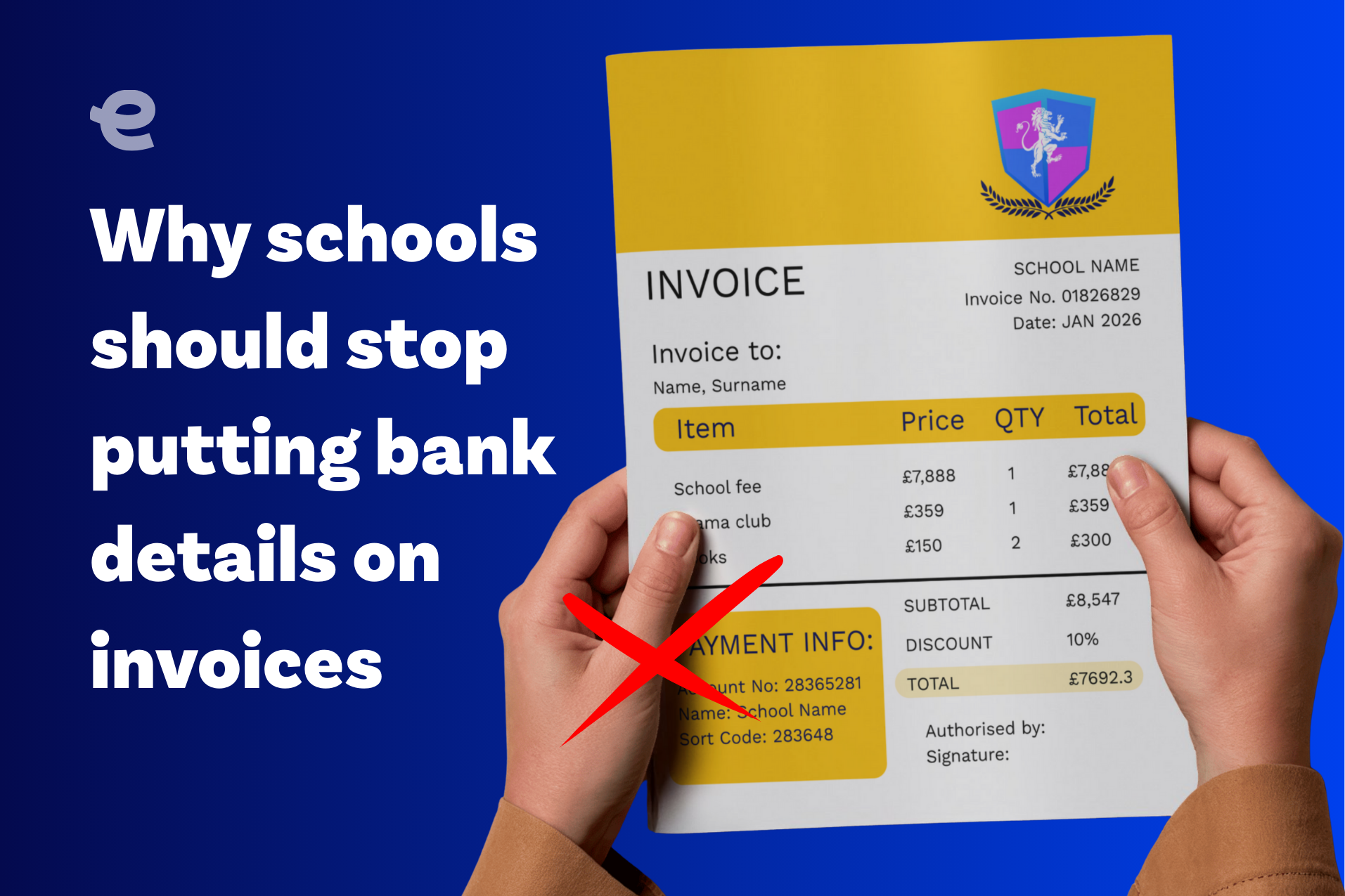
For years, adding bank details to the bottom of an invoice has felt like standard practice in school billing. It’s familiar, quick, and seems helpful. But in today’s world of increasingly sophisticated phishing and fraud attempts, it’s no longer best practice, particularly for schools, where trust with parents and guardians is critical.
At esenda, we work with schools every day to make school payments simpler and more secure. One of the most effective steps schools can take is moving away from displaying bank details on invoices and instead using secure payment links.
The growing risk to school payments and billing teams
Phishing attacks targeting schools and parents are increasing year on year. Fraudsters are now highly adept at copying genuine-looking school invoices and emails, often changing only a single line of bank details.
When bank details are printed directly on an invoice:
- Those details can be copied and reused in fraudulent communications
- Parents may not spot that account details have been altered
- School finance teams are left managing payment disputes, lost funds and difficult conversations
Even if your internal systems are secure, sharing bank details so openly makes school payment fraud easier to carry out elsewhere.
Why secure payment links are best practice for schools
Secure payment links remove the need to expose bank details at all. Instead, parents are directed to a protected payment page where they can complete their payment safely.
Using secure payment links for school payments means:
- Bank details are never displayed on invoices or emails
- Payments are made within a controlled, encrypted environment
- The risk of payment redirection fraud is significantly reduced
For parents, the experience is also clearer and more reassuring. Click the link, pay securely, and receive immediate confirmation.
What about parents
A common question from school finance teams is: “What about parents who already pay by Direct Debit?”
Secure payment links work alongside Direct Debit, not instead of it.
Schools can include a simple line on invoices such as:
If you already have a Direct Debit set up, please ignore the payment link.
This keeps school billing consistent for all families, while avoiding the need to reintroduce bank details and the risks that come with them.

Improving school security for parents and staff
Schools are increasingly expected to demonstrate strong school security and good data-handling practices, not just in the classroom, but across finance and billing too.
Removing bank details from invoices:
- Helps protect parents from phishing and invoice fraud
- Reduces the likelihood of payment errors and disputes
- Shows that your school follows modern, security-first best practice
It’s a simple change that sends a strong message about how seriously your school takes financial security.
A safer approach to school payments
Including bank details on invoices may once have been normal in school billing, but it isn’t anymore. Secure payment links provide a safer, more professional way to collect school payments, while continuing to support Direct Debit where it’s already in place.
At esenda, we help schools simplify billing, reduce risk, and give parents a secure, trusted way to pay. If your invoices still include bank details, now is the time to rethink that approach and take a positive step towards stronger school payment security.