Independent Schools Should Rethink Ad-Hoc Payments
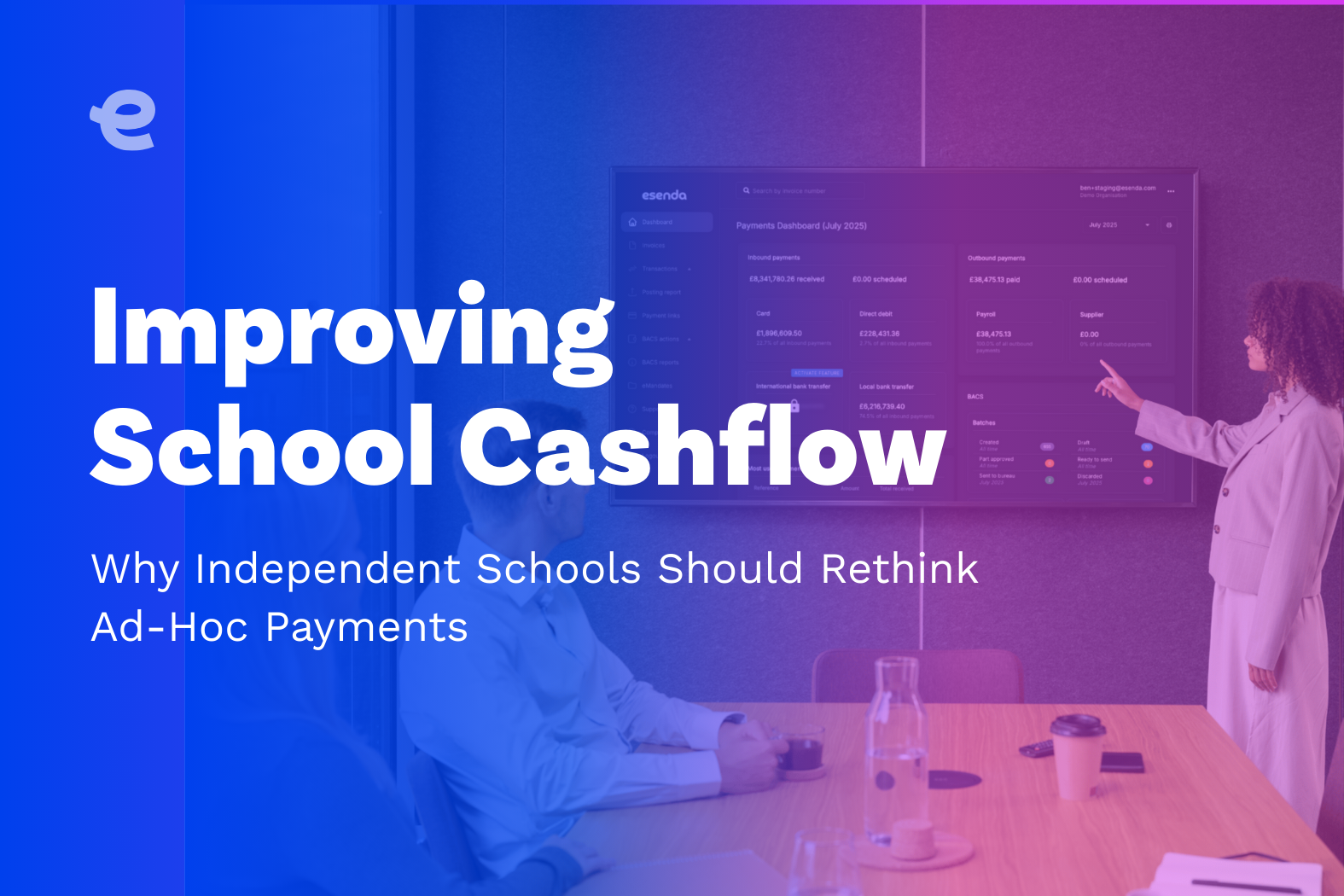
For many independent schools, termly fee billing is a well-oiled machine.
But when it comes to ad-hoc payments like trips, music lessons, uniform, transport changes, exam resits, deposits, fundraising, or late extras, the process is often very different.
Instead of requesting payment at the point of commitment, these costs are frequently added to the next term’s bill in arrears.
It might feel simple, but it may be quietly impacting your school cashflow.
In an environment where financial stability matters more than ever, independent schools are rethinking how and when they collect additional income, and increasingly turning to modern school payment software to do it.
The Hidden Cashflow Drain of Billing in Arrears
When extra costs are rolled into future term bills, schools effectively fund those activities themselves in the meantime.
Let’s take a simple example:
- A residential trip costs £20,000 to run.
- Parents are billed for it three months later in the next term invoice.
- The school carries that cost in the interim.
Multiply that across multiple year groups, activities, and departments and the working capital requirement quickly grows.
This approach can:
- Create unnecessary pressure on school cashflow
- Increase exposure to late or missed payments
- Blur financial visibility between committed and collected income
- Make forecasting less predictable
For smaller independent schools in particular, this lag can have a material impact.
The Shift: Instant Payment Options for Ad-Hoc Charges
Modern school payment software allows schools to request payment upfront, at the moment a parent commits.
Instead of:
“We’ll add this to your next bill.”
Schools can now say:
“Please complete payment to confirm your child’s place.”
This small operational change can transform school cashflow.
Examples include:
- School trips and residentials
- Music and peripatetic lessons
- Extra-curricular clubs
- Uniform top-ups
- Transport changes
- Exam resits
- Deposits and confirmations
By issuing secure payment links or enabling immediate checkout options, schools reduce the time between commitment and cash received.
Reducing Admin for Finance Teams
There’s another benefit that often gets overlooked: time.
When extras are added in arrears, finance teams must:
- Track commitments manually
- Adjust bills
- Reconcile queries
- Handle disputes months later
- Chase outstanding balances
With integrated school payment software, payments are linked directly to the activity. Once paid, they’re marked as complete. No re-keying. No manual cross-checking. No delayed surprises.
For bursars and finance teams already stretched, this reduces friction significantly.
Improving Financial Control Without Increasing Pressure
Some schools worry that requesting payment upfront feels less flexible, when in reality, the opposite is often true.
Clear, secure payment requests improve transparency and allow parents to pay in a way that works for them. And rather than waiting for everything to be totted up in their termly bill, they can manager smaller payments as and when works for them.
