Where the fall is concentrated
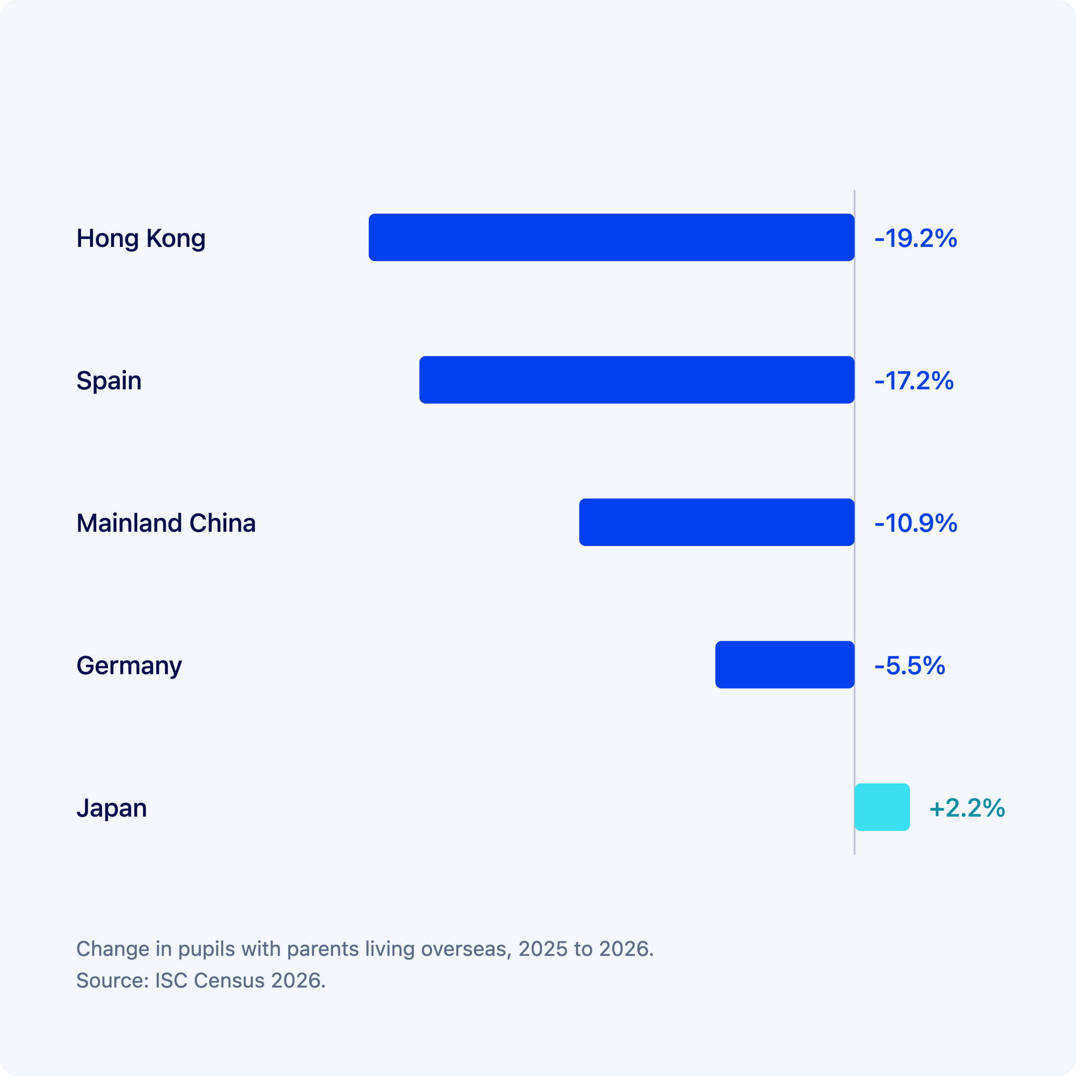
It isn't evenly spread. China remains the largest source country despite falling 10.9% to 5,576 pupils, while Hong Kong dropped 19.2% to 3,620. Germany fell 5.5%, Spain 17.2%, and Japan rose 2.2% to 690.
The profile matters as much as the total: 55.7% of international pupils are in Years 12 and 13, and 93% board. A school losing international pupils is usually losing sixth-form boarders, which is the highest fee point it has.
The other direction of travel
While fewer international families are coming to the UK, more UK schools are going to them. ISC schools now operate 134 overseas campuses educating 97,455 pupils, up from 115 campuses and 86,865 pupils a year earlier, concentrated in Asia and the Middle East.
The sector's international footprint isn't shrinking. It's relocating. Both directions involve collecting fees across borders, in different currencies, under different banking conditions.
What this means in practice
When the pool is smaller, the cost of losing a family rises and the things that quietly annoy them stop being small.
Which payment methods a parent can actually see. Card, bank transfer and international transfer carry different costs and different success rates depending on where the payer is. A parent shown only one may be looking at the most expensive option available to them, or one that increases friction around the payment.
Clarity about currency. Overseas parents want to know what they are paying, in what currency, and what the school will receive. Ambiguity here can create delayed payment and increased admin.
What happens when a payment fails. Cross-border payments fail for reasons a parent can't diagnose; regional card restrictions, bank checks, correspondent bank delays. A clear route to help matters more than an explanation of the cause.