POV: Reducing Payment Risk From the Support Desk
By Glenn Roche, Support Manager at esenda
When people talk about payment fraud, it can often sound abstract.
From the support desk, it isn’t.
It’s a parent calling in a panic because they’ve sent money to the wrong account.
It’s a bursar trying to trace funds that never arrived.
It’s a reconciliation that suddenly doesn’t balance, and nobody knows why.
In education, payments are high value and high volume. And over the past few years, we’ve seen a clear rise in phishing emails, invoice manipulation and bank detail substitution scams targeting schools and colleges.
Support teams tend to see the impact first.
The Pattern We See in Payment Support
Across the sector, the issues are often similar.
Bank details shared on PDFs.
Sort codes copied into emails.
“Updated bank details” requests that look legitimate, but aren’t.
Traditional payment processes rely heavily on static account information. Once those details are exposed, they can be intercepted, altered or reused. And when they’re compromised, they’re difficult to revoke quickly.
By the time it reaches support, the damage is usually operational:
- Misrouted funds
- Delays in reconciliation
- Confused payers
- Time spent investigating instead of running the school
And alongside that comes something harder to measure; a big dent in trust.
When parents aren’t sure if a payment link is genuine, or a finance team is chasing missing funds, confidence drops quickly.
What Changes When You Remove Bank Details
One of the biggest differences I’ve seen working with esenda is what happens when you remove static bank details from the journey entirely.
Payments aren’t made by emailing account numbers or attaching invoices with sort codes. They’re initiated through secure, purpose-built URLs. The links are unique and controlled, which significantly reduces the opportunity for manipulation.
From a support perspective, that changes the nature of the tickets we receive.
We see:
- Fewer fraud-related queries
- Fewer cases of payments sent to the wrong account
- Fewer reconciliation delays caused by human error
When something unusual does happen, it’s easier to identify and resolve because the process is structured and trackable.
As I often say to schools:
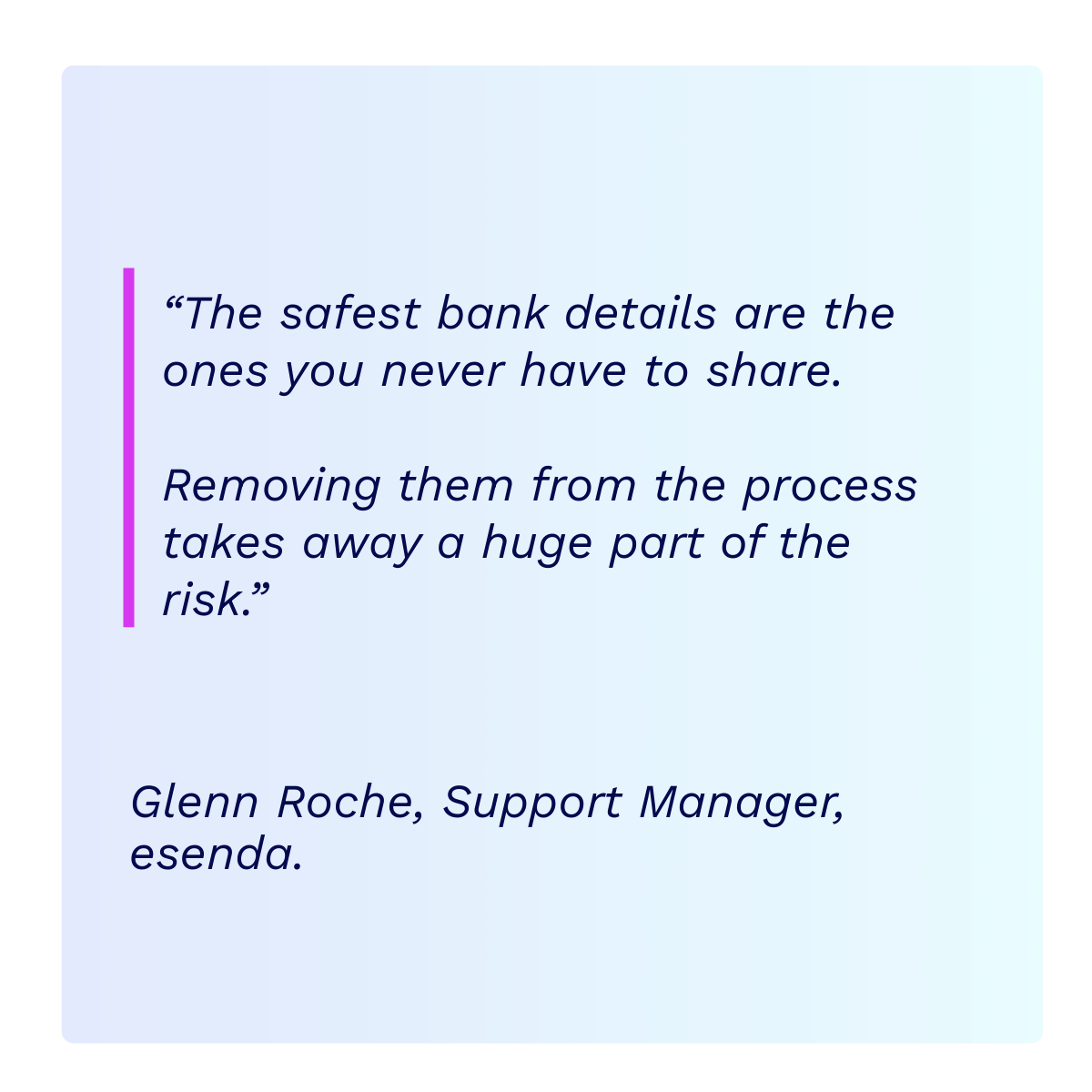
“The safest bank details are the ones you never have to share. Removing them from the process takes away a huge part of the risk.”